Esky Usb Cable Driver
Have a rotorcraft that has two or more horizontal rotors?Then you're in the right place!Bicopters, Tricopters, Quadcopters, Pentacopters, Hexacopters, Octocopters, indeed any non-fixed-wing aircraft is very welcome here. Rules 1 - Be civil.Treat others with respect.

Harassment of others is strictly forbidden. It is entirely possible to convey a differing opinion, without personally attacking others.If you feel that you're not mature enough to abide by this rule, then please refrain from commenting.2 - Vote based on quality, not opinion.If you think something contributes to conversation, upvote it.
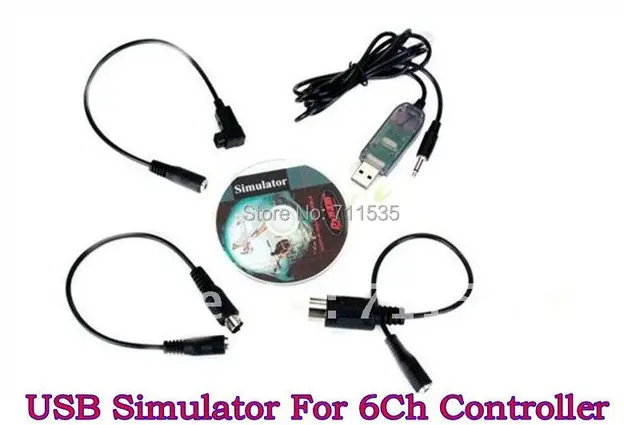
I picked up a cable to connect the S-Video output of my FS-i6 to USB. When I plug it into my PC, I see a new 'game controller' device listed in 'Devices and Printers' called 'PPM' where ' is likely some unprintable unicode character.I have a copy of Liftoff as well. Any idea how to hook the two up together? I can't see to get Liftoff (or any other software) actually see the device when I try to calibrate it.EDIT: It turns out that the cable I bought was actually this one:It comes with a link to a site that no longer exists.I took the advice of and used a copy of SPP plus a male-to-male microphone cable into my mic socket on my PC. It's now kind-of working in Liftoff, although I think I need to calibrate it.Since I have a Mode 1 controller (I was sent the wrong version by banggood.com) I think I am going to take the controller apart and set it up for mode 2, then put it all back together and try to calibrate it properly for Liftoff.Thanks to everyone who helped so far!
I'm happy just using the microphone input with SPP for now, hopefully tuning it won't be too hard.EDIT2: Oh, and the advice on turning the controller into 'student mode' is also really important. It's one of the menu options on the controller itself. I just got this to work yesterday in a similar fashion with the same setup (Windows 10 and a Eachine/FlySky i6). I didn't spend enough time to get the USB dongle to work (I also got the PPM device to show up but the software wouldn't see it as an audio device), but the kit did have enough to get me up and running with the addition of a male-male audio cable. I'll leave this post here for others to find as I couldn't find a guide to get the hardware up and running with my setup. You need to put the transmitter in 'Student Mode' to have it kick out a signal.
This took me way too long to figure out. Get into the menu by holding the bottom two trim buttons towards the center and turning the transmitter on.
It unlocks the ability to get into the menu. Disable any other audio input devices.
Usb Driver
It seems the SmartPropPlus(SPP) isn't smart enough/didn't have the option to switch inputs. Plug a male-male audio cable into the adapter that you got in your USB simulator kit. Plug the other end into your microphone port. Chances are your volume is set to max for your mic. Go into the volume mixer and turn that down to 60%. Too much volume and SPP doesn't work.
Open up SPP and set your options for your receiver. You should be able to wiggle the control sticks and have the levels change on screen. At this point, you're ready to go with any program you choose. The Drone Racing League app was easy to setup past this point and worked pretty well with the above setup.I'll be working later to get the USB adapter to work.
I just ran out of time yesterday and will update this post when I figure it out. There are two cables for that controller, one data and one simulation.
You need to get a simulation cable (USB Flight Simulator Cable Adaptor for JR Futaba RC RealFlight Spektrum FMS Esky) brings one up cheap on ebay. Mine shows up fine when the usb stick is in the 'G.' config with. being whatever number is printed on the usb sticker.The Data cable is used to flash firmware. In DRL sim, once its plugged in it just recognises the controller as a Taranis. Might need some calibration.
I haven't used liftoff so I can confirm but it should be a similar procedure. I downloaded the MacOSXVCPDriver.zip file, then unzipped the SiLabsUSBDriverDisk.dmg from inside it. Then ran that file which mounted the disk image and had 3 files inside, a text file, a driver.pkg file and an uninstall script. I ran the pkg file and went through the steps to install the driver. Afterwards, I plugged the USB cable into the laptop, plugged the s-video type cable into the back of the transmitter and then plugged the 3.5mm headphone type plug into the jack on the USB cable. I'm using FPV Freerider and I selected the USB controller as my input.

I clicked the button to calibrate controller and set the throttle to be zero at the bottom.If you don't see anything moving around during the calibration process, it isn't communicating properly. Sometimes I have to power the transmitter off and back on or reseat the cables, including the 3.5mm plug into its jack.I'm guessing the process on Windows 10 is similar. I have a Windows 10 PC at home I can test on too. Did you figure this out in the end?I just got my cable in the mail and I installed the driver, then connected the usb device by itself and my Windows 8 tells me 'USB Device non recognized' and 'Device Descriptor request failed' in the device manager. I tried to select the correct driver then, but it still 'doesn't start'. The LED is blinking fast in red, even when I plug in and turn the controller on.I tried to us SmartPopoPlus instead, using the TrainerCable-to-jack converter into the microphone input. It kind of works but it is incredibly unstable!
SPP detects 6 channels but then randomly thinks there are more. I tried using it in FPV freerider and it works but it is not playable, because of the unstability.
Esky Usb Cable Driver Download
Any help appreciated!.