Jesus Of Nazareth Movie
Contents.Plot summary The storyline of Jesus of Nazareth is a kind of cinematic, or ', blending the narratives of all four accounts. It takes a fairly naturalistic approach, de-emphasising special effects when miracles are depicted, and presenting Jesus as more or less evenly divine and human. As such, God's voice is not heard during the baptism of Jesus in the, but John speaks his words 'this is my beloved son' instead. The are cut entirely, removing entirely. The familiar Christian episodes are presented chronologically: the betrothal, and later, of Mary and Joseph; the; the; the circumcision of John the Baptist; the; the; the; the; the and; the; the.Jesus tells his followers that the is not a 'dead stone,' but. Other episodes in the movie include the; the healing of ' daughter; Jesus helping Peter catch the fish; the (Luke 15: 11-32); a dialogue between Jesus and (non-biblical); Matthew's dinner party; the; debating with;; the (John 11:43); the; the;; the;; dialogue with; the; the.At the, Jesus is accused of blasphemy for calling himself the son of the God of Israel.
Caiaphas announces ', denying the God of Israel has a son. The ensuing scenes include; the ('); the (John 18-19; including the ); the; the (Laurence Olivier's Nicodemus recites the ' passage (Isaiah 53:3-5) as he looks helplessly on the crucified Messiah); the; and an. The film's storyline concludes with the non-Biblical character Zerah and his colleagues gazing despairingly into the empty tomb.
Zerah laments, 'Now it begins. It all begins'.Cast Starring. asGuest Stars. This section needs additional citations for. Unsourced material may be challenged and removed.Find sources: – ( April 2017) Although the film has been received as generally faithful to the Gospel sources, and more comprehensive than previous film versions, Zeffirelli and his screenwriters found it necessary to take some liberties with the scriptures for purposes of brevity and narrative continuity.
Some of these deviations have a basis in time-honoured, extra-Biblical traditions (e.g., that the infant Jesus was visited by three 'kings'; the Bible calls them 'magi' or 'astrologers', yet does not state how many there were). Other deviations were invented for the script:. Perhaps the greatest liberties taken in the screenplay are interpretations of the motivation of Judas Iscariot in betraying Jesus to the authorities prior to his arrest and execution. In contrast to the Gospels – which vilify Judas as a thief who stole from the Disciples’ money purse (John 12:6) and betrayed his Master simply for money (Luke 22:5) – the film portrays Judas as a much-misunderstood political person who, in several scenes, conspires with the Zealots for the sake of Jewish liberation in a way that could be interpreted as honourable, albeit misguided.
Robert Powell
The film introduces a number of fictional characters. Of these, 's Zerah, who is essentially the series 'main villain', has the most screen time. Zerah is used primarily to supply Judas Iscariot with a motive for his treachery: he persuades him that an appearance before the Sanhedrin will offer Jesus an opportunity to prove himself.
He is also used to create a main lead villain when Jesus personally confronts the temple priesthood, in particular during the cleansing of the Temple and the Gethsemane arrest scene. Other invented characters include Quintillius, Yehuda and Amos. In the Bible, the only mention of Jesus in childhood is his trip to the temple in Jerusalem as a 12-year-old. In the film, the boy Jesus is also portrayed at his, which is interrupted by a raid of Roman soldiers plundering supplies. The portrayal of a Bar Mitzvah is as the ceremony most likely did not exist at that time.
It is deliberately portrayed by the Director because a modern non-Jewish audience might not be aware of that obscure fact and would expect to see it and he did not want to defy audience expectation. The boy Jesus is also portrayed as climbing a ladder and looking out over the landscape of Judea after Joseph makes the analogy of a ladder reaching to heaven. The prostitute and the woman who anoints Jesus' feet with ointment and her hair are combined into one person.
The Bible indicates that (who is never actually said to be a prostitute) is the woman from whom seven demons were cast out, while the ointment-bearing woman is, a sister of Lazarus (John 11:2). Nevertheless, the identification of the three women is present in many Christian traditions and is not particular to the film. In the film, Nicodemus visits Jesus in the late afternoon, not at night as in John 3:3. The Apostle Andrew introduces Simon to Jesus as 'My brother, Simon Peter.' But 'Peter' is the name that Jesus later gave to Simon (John 1:42, Matthew 16:18) after he was well acquainted with him, not his original given name. Later in the mini-series, Jesus does give Simon the name of 'Peter'.
The Apostle Thomas, prior to his calling, is depicted as a servant of Jairus, the synagogue leader whose 12-year-old daughter Jesus raises from the dead. Nowhere in the three gospel accounts of this resurrection is Thomas described as Jairus's servant. This was done in the movie to conveniently introduce Thomas as the doubter when Jesus said Jairus' dead daughter is 'only sleeping.'
. Barabbas is portrayed in the film as a Zealot (political extremist and agitator).
The meeting and dialogue between Jesus and Barabbas are made up. The (Luke 15:11-32) is used as a plot device which simultaneously redeems the disciple Matthew and reconciles him to his bitter enemy, Simon Peter. Although not in the Bible, this has been praised as one of the film's particularly felicitous innovations.
(The Gospels do not record either a conflict or a particular friendship between Matthew and Simon Peter.). In the film, Pontius Pilate, having convicted Jesus of treason, sentences Him to be crucified. The Gospels record that Pilate acquitted Jesus but sentenced Him under pressure from the crowd.
The film implies such pressure to convict was applied prior to the trial, by the Sanhedrin, but does not explicitly state it. The film also shifts Pilate washing his hands to the scene in which he is introduced, rather than during the trial itself.
The film does not depict Pilate remanding Jesus' case to Herod Antipas and Antipas sending Jesus back to Pilate (Luke 23:6-12). The Gospels and the film both relate an account of a Roman centurion who petitions Jesus to heal his sick servant. The film, but not the Gospels, presents the same officer (portrayed by ) as one of the soldiers standing at the foot of the Cross, where he sympathetically allows Mary to approach her son. In the Bible Judas is paid 30 pieces of silver for betraying Jesus. Full of remorse, he later gives the silver back to the priests (Matthew 27:3-5). In the film, Judas is given silver coins as an afterthought by Zerah; he does not return them and they are shown lying on the ground under the tree from which he hangs himself. The film depicts a scene that shows Joseph dying.
The Gospels never mention anything about Joseph after the story of Jesus, as a boy, in the Temple. The healing of the blind beggar scene, where Jesus spat on dirt and rubbed the mud in the blind man's eyes, was set in the Temple; the whole of John 9 places this episode after Jesus had left the Temple and was 'walking along.'
Awards and nominations Jesus of Nazareth received an nomination for Outstanding Special Drama. Additionally, who portrayed the apostle, received a nomination for Outstanding Performance by a Supporting Actor in a Drama Special.The miniseries was nominated for six: Best Actor, Best Cameraman, Best Single Television Play, Best Editor, Best Costume Design and Best Sound. It won none.Jesus of Nazareth won awards for Best to, Best to Lucia Mirisola and Best Production Design, to Mirisola again, from the. Quasi-sequel. This section needs additional citations for.
Unsourced material may be challenged and removed.Find sources: – ( April 2017) The success of this miniseries led, in 1985, to a kind of sequel, which wove a fictional story set in first-century Rome into Biblical and extra-Biblical material based on the. Although many of the same crew members worked on both series, the only key cast members to return were Tony Vogel, Ian McShane, James Mason and Fernando Rey, all playing different roles.References.
“Jesus of Nazareth” starred almost everybody who was anybody in 1970s cinema. The cast of Franco Zeffirelli’s mini-series reads like an honor roll of Hollywood legends: Laurence Olivier, Christopher Plummer, Anne Bancroft, Olivia Hussey, Peter Ustinov and James Earl Jones, among others, all took part in his ambitious adaptation of the life of Christ.Yet, despite its all-star cast, “Jesus of Nazareth” has not achieved the iconic status of the great biblical epics, like “The Ten Commandments” (1956) and “Ben Hur” (1959). The issue, in part, seems to be style. One might say the series lacks it, lurching between melodrama and something that nearly approaches comedy. Scenes of Michael York’s John the Baptist volubly crying out in the desert cut away to shots of Plummer’s Herod cavorting with Herodias; Hussey’s ethereal Virgin Mary is replaced on the screen by Ustinov, droll as ever as Old Herod.
“As with any international casting roster, some performances can be both uneven and jarring,” observed a 1977 New York Times review. “Just as one is settling into the substance of a scene, one sees Laurence Olivier lurking in some corner as Nicodemus, or Ralph Richardson as Simeon staggering dramatically into a synagogue.” It is a strange production that sometimes seems unsure of what it is and what it intends to be.Disjointedness should not necessarily be taken as a defect.In 2017, the series was described once again as “uneven,” by National Catholic Register’s Steven Greydanus.
Though his overall take on it was positive, he noted that its “best sequences.alternate with indifferent or middling material.” He writes: “Key moments like Peter’s great confession of Jesus and the Last Supper are reverentially staged, while other moments like the Parable of the Prodigal Son and Jesus’ trial before the Sanhedrin are dramatically reimagined—and not infrequently the latter are more interesting and valuable than the former.”And there is a disjunction between reverence and lively drama in “Jesus of Nazareth”—but that disjointedness should not necessarily be taken as a defect. Rather, I find that the absence of a unified style is the chief strength of “Jesus of Nazareth.” After all, Jesus Christ became a man who lived at a specific moment in history—and history operates by different rules than art.
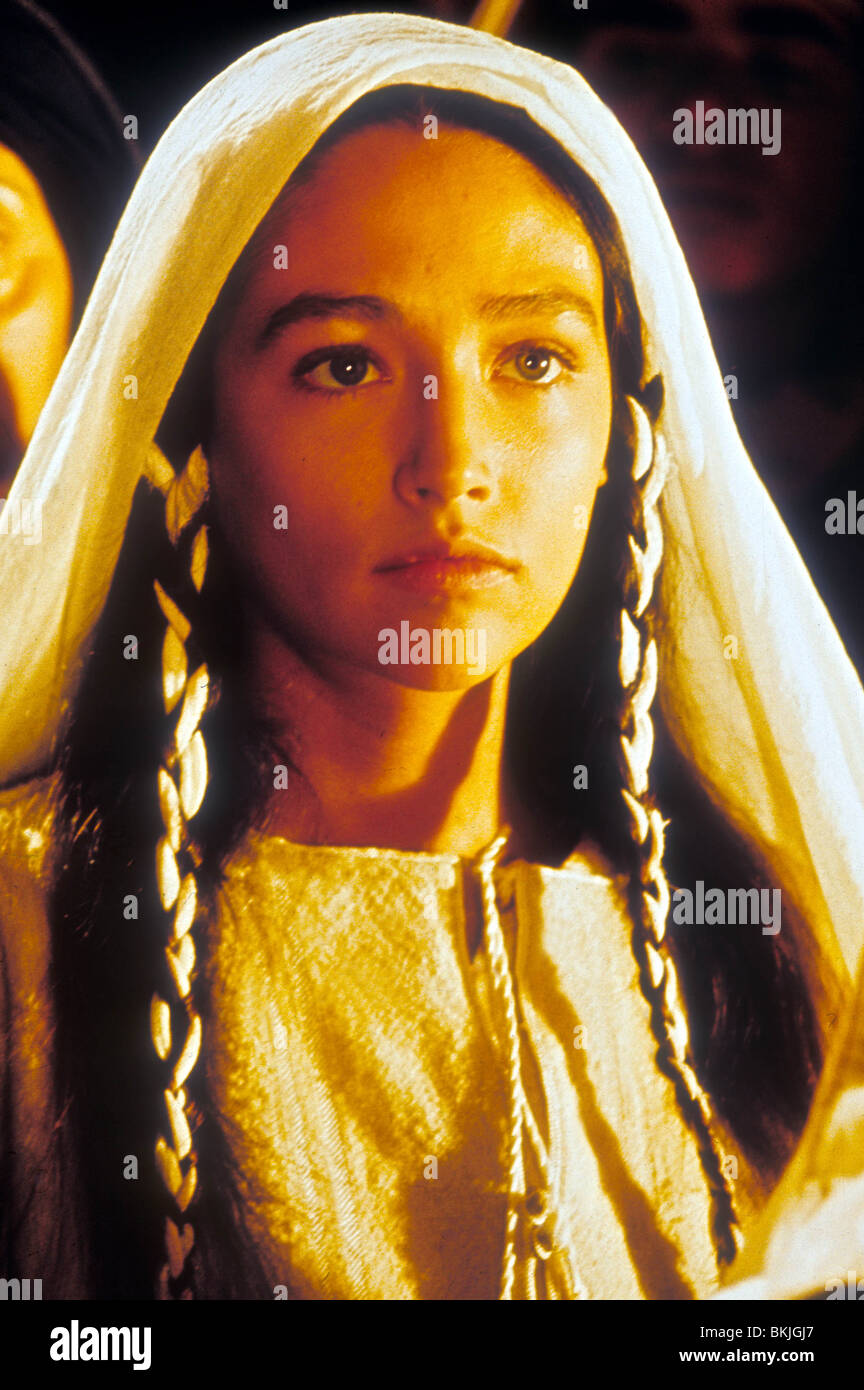
When it comes to historical accuracy in religious movies, it is difficult to top Mel Gibson’s “The Passion of the Christ” (2004), which takes meticulous pains to capture the sounds and sights of life in first-century Palestine, down to the Aramaic spoken by Jesus and his contemporaries. While it never appears to be deliberately anachronistic, “Jesus of Nazareth” goes to no such trouble. The characters all speak English, many with British accents. The costumes—particularly the carefully crimped forelocks worn by Joseph—seem a bit like, well, costumes. Hussey, as the Virgin Mary, never looks a day under 20, despite valiant attempts to age her, in later scenes, by streaking her hair with gray. She does not appear with Robert Powell’s adult Jesus until the very end of the series, probably because it was only too obvious that Powell was older than she was.But “Jesus of Nazareth” is faithful to history in the very unevenness with which critics have taken issue.
Theologians may debate about the degree to which history is scripted by God, but it seems clear that history—whether or not it has a script—has no single genre, mood or tone.History is haphazard and wild, oscillating between tragedy and comedy. Historical actors do not always deliver their lines with the level of gravitas that a director might wish. There is no soundtrack, no special effects, no pause for applause.“Jesus of Nazareth” is as comfortable dealing in sincerity as it is wallowing in melodrama. The most significant moments in the Gospels, such as the Nativity and the Passion feel very true to the Gospels. The shepherds kneel to the newborn baby Jesus against a flourish of trumpets and timpani, for instance.History is haphazard and wild, oscillating between tragedy and comedy.At other moments, a touch of mischief creeps in. Ustinov makes King Herod sound like an Oxford don, rolling his Rs and playing the dictionary like a piano.
“Thank the divine Augustus for his unswerving—hem, benevolence,” he drawls to the patronizing Roman emissary who has just announced Caesar’s new census. When one of Mary Magdalene’s clients—clients!—asks her why she has not heard Jesus preach yet, her answer is blunt: “I sleep during the day, don’t I?” In this case, the series picks up on the historically unlikely but popular idea that Mary Magdalene was a prostitute. “This Jesus—he says it’s not the righteous that need him, only the sinners,” the client replies, cheerfully counting out coins into her hand. We begin to see how readily this material can lend itself to the screwball treatment that it received in Monty Python’s “Life of Brian” (1979). In a fitting twist, “Life of Brian” was shot on the sets of “Jesus of Nazareth” a few years later.These shifts between high drama and something lower and earthy in “Jesus of Nazareth” bring home the fact that Jesus Christ was a man who entered into history and was surrounded by ordinary people. If some of the material in “Jesus of Nazareth” seems too coarse for the seriousness of its central character, all the better: Jesus lived in a coarse and unpredictable world.Representing something like the incarnation in art, then, becomes no straightforward task.
Anything that truly captures the mystery of God become man should be uncertain, unsettled and uneven. Such art may not seem “good” by conventional standards because it defies the categories that we typically use to evaluate it.Instead, the story of Jesus requires a different kind of art, one that is looser and more responsive to the lives of real human beings. In Mimesis: The Representation of Reality in Western Literature (1953), Erich Auerbach says the literary tradition of realism was partially invented by the Jews in the Torah and carried on by the Christians in the New Testament. They created a sense of realism, he argues, by mixing “high” and “low” characters, subject matter, style and dialogue.This amalgam of “high” and “low” contradicted ancient traditions in which “high” characters like gods, princes and heroes were treated in elevated forms such as the epic, while “low” characters like servants and clowns were portrayed in comedies and burlesques.The separation of styles, showcased by the likes of Homer, lingered into the Renaissance.
Open any play by Shakespeare, and you will notice that the higher-born or noble characters tend to speak in poetic meter, while their servants—when speaking to each other—communicate in the lowlier form of prose.The Gospels refuse to adhere to any separation of “high” and “low” forms and, in doing so, captured the messy and incongruous elements of history. Auerbach argues that this “mingling of styles” is embedded in Christian theology: It is “graphically and harshly dramatized through God’s incarnation in a human being of the humblest social station, through his existence on earth amid humble everyday people and conditions, and through his Passion which, judged by earthly standards, was ignominious.”Erich Auerbach was a German Jew. He wrote Mimesis in Turkey in the 1940s while living in exile from the Third Reich.
For him, the incarnation was an interesting theory or literary development, not a fact. But if we take the incarnation as a fact, it becomes plain why the New Testament represents reality in a different way than Homer’s epics—in contrast to a fable, the New Testament is, actually, representing reality. God, in becoming man, fused the high drama of “elevated” characters and the low comedy of servants and fools. In his very person and in the movement he created the Lord blended poetry and prose.The oddities of “Jesus of Nazareth” should not be dismissed as defects.It is this blend that “Jesus of Nazareth” does so well, especially with regard to the title character. Jesus is a difficult person to represent in film, especially if the film intends to follow the script laid out by the New Testament.
As a character, he cannot undergo any real development because his character does not permit it—by his very nature he is perfect and unchangeable. The most interesting figures in films about Jesus tend to be not Jesus himself but disciples or other auxiliaries. Like “Ben Hur” (1956), “Risen” (2016) capitalizes on this tendency by inventing a new central hero and allowing Jesus to appear in a supporting role, skirting any obligation or temptation to develop the character of the Son of God.Robert Powell’s performance of Jesus is, like the film, “uneven.” His iteration of Jesus spends half the film staring beatifically off into the distance and declaiming in a halting monotone and the other half animated by a sort of desperate energy, clearly only too aware of all that he must accomplish in so little time.
He tells the parable of the Prodigal Son with zest—even performing the voice of the aggrieved older brother—and his audience hangs on every word, listening like people who have never heard it before. He sees potential in Barrabas and tries to win him to his flock, and we feel his disappointment when Barrabas refuses and storms away.One of Powell’s most effective moments as Jesus occurs when he first encounters Judas Iscariot or, more accurately, when Judas, aglow with revolutionary idealism, offers himself to Jesus as a “scholar who wishes to serve you.” This is one of the moments when Powell’s immobility really works; he sits leaning against a wall, head thrown back, eyes closed. But when Judas finishes his speech, he suddenly bows his head and covers his face with his hands, as if burdened by something painful that he alone can know. We recognize, eerily, that this man can see the future. We glimpse the divine in this simple, human gesture.Powell’s Jesus moves lightly through a world that does not fully understand who he is. The series allows its viewers to share in this mysterious collaboration between the divine and the everyday —Auerbach’s “mingling of styles”—by allowing them to experience what it might have been like to witness the events of the Gospels in real time. Most films about Jesus are pitched to believers, withholding nothing from the audience—perhaps because there would be no point in doing so.
The Annunciation sequence in “The Nativity Story” (2006), for instance, stages the full dialogue between Mary and Gabriel and ends with a swell of ethereal music that acts almost like a nod. You know what this means, it says. You know the significance of this, and how everything will play out.In “Jesus of Nazareth,” the Annunciation is shot from the point of view of Mary’s mother, who watches her daughter cowering on the floor and making her “fiat” to a ray of light shining in through the window.
We do not see the angel. Instead, we see Mary seeing the angel and must have faith that she truly sees who she is speaking to. The question of spectatorship comes into play most profoundly in the scene where Jesus raises Lazarus from the dead. The camera pans out as Lazarus advances from his tomb swathed in bandages. In panning out, it allows us to see the large crowd of onlookers that has gathered to witness this marvel. It also suddenly allows us to see the action from their vantage point. Lazarus becomes a mummy, an animate corpse defying the order of nature.
We realize how frightening, and even horrific, this miracle might have looked to those who originally witnessed it, without having had their interpretation of the event shaped by centuries of exegesis and art.The oddities of “Jesus of Nazareth,” then, should not be dismissed as defects. They capture the sheer strangeness and mystery of the Incarnation in a way that more polished films about Jesus fail to do. “What we see here is a world which on the one hand is entirely real, average, identifiable as to place, time and circumstances,” writes Auerbach, in describing the intrusion of Jesus Christ into history, “but which on the other hand is shaken in its very foundations, is transforming and renewing itself before our eyes.”“Jesus of Nazareth” attends equally to both the reality and the transformation. I didn't see 'Jesus of Nazareth' for perhaps fifteen to twenty years after it was released because it was a 'made for TV movie'. Inadvertently, I happened to catch its version of the 'Parable of the Prodigal Son' one night and was deeply moved by the dramatic imaging of this story. I realized that I had been guilty of snobbery and eventually watched the entire production.
I believe that it captures the essence of the Gospels and renders the character of Jesus in a satisfying and respectful way.I use 'Jesus of Nazareth' as a catechetical tool for middle-schoolers. They have absolutely no idea who the historical Jesus was. I especially focus on the love and compassion that Jesus demonstrates during his healings. And, as in the healing of the paralytic whose sins Jesus forgives, I highlight the reality that Jesus is God.On a more mundane level, 'Jesus of Nazareth' has one of the most Oscar-laden casts of any film ever made. Seven of its actors won Oscars - Ann Bancroft, Ernest Borgnine, Laurence Olivier, Anthony Quinn (2), Christopher Plummer, Rod Steiger and Peter Ustinov (2). And to think that James Mason, Ralph Richardson, Ian Holm, all nominated for acting Oscars, never took home the award.
The great Anthony Burgess co-wrote the screenplay.I've seen a number of films where Christ is either the main character or an important shadow player. 'King of Kings' (1961) is interesting for its magnificent Sermon on the Mount. The film was savaged by some critics for Jefferey Hunter's performance as Christ but I think he was unfairly maligned.
It's directed by Nicholas Ray of whom Jean-Luc Goddard said 'Le cinema, c'est Nicholas Ray'. The film has grown in stature over the years and I recommend it even if Robert Ryan (51) is too old to play John the Baptist and the wigs look like they came from the local joke shop.I found 'The Gospel According to Matthew' (1964) by the gay communist Pier Paolo Pasolini to be rewarding. Pasolini, who was not a believer, once said “I am not interested in deconsecrating: this is a fashion I hate, it is petit-bourgeois. I want to reconsecrate things as much as possible, I want to re-mythicize them.”I try not to criticize movies I have not watched to completion but I found 'The Greatest Story Ever Told' to be torturous and unwatchable. Though some scenes in 'The Last Temptation of Christ' (1988) are cinematically intriguing, I don't think the film works either in its portrayal of Christ or in conveying the Gospel message. I actually read the novel by Nikos Kazantzakis 50 years ago.I use the clip from 'Ben Hur' (1959) in CCD where Jesus gives a parched Judah a drink of water. This scene conveys both the compassion as well as the power of our Lord as he stares down the Roman officer who tries to stop him from aiding Judah.Of course, I’ve seen “The Robe” (1953), “Quo Vadis” (1950), etc where the character of the Lord is a major influence but is not seen.In the end, the best Christian films I’ve seen don’t involve Jesus except in the most indirect way.
I’m thinking about “Diary of a Country Priest” and “The Passion of Joan of Arc”. These are true masterpieces of world cinema which cannot be said about any of the above-mentioned films.In describing films as being “uneven” one just has to think about John Ford’s “The Searchers” (1956) which has many technical goofs, embarrassing humor, and a disgraceful treatment of an Indian woman named, “Look”. And yet in 2012, 846 international critics, academics and programmers voted it the 7th greatest film of all time in a BFI / Sight & Sound poll taken once a decade. David Lean studied the film before making “Lawrence of Arabia”.


It is once of Martin Scorsese’s favorite films and he references in at least two of his movies. Stephen Spielberg always takes a copy of “The Searchers” whenever he goes on location to shoot a film. The “Star Wars” series pays homage to “The Searchers” in several of its episodes. Many very good films are 'uneven'. Nice article but.
Mel Gibson's Passion of the Christ is one of the least Biblically and historically accurate depictions. The Aramaic adds verisimilitude not accuracy. In fact no one in the movie speaks Greek which would almost certainly have been the language used when the priests spoke with Pilate.
Perhaps it wasn't in the budget. They did have a Jesuit Old Testament scholar advising them (Bill Fulco). They should have added a New Testament scholar as well.
Then of course you have the plotlines added from dead mystics. 'Mel Gibson's Passion of the Christ is one of the least Biblically and historically accurate depictions.
No one in the movie speaks Greek.' Of course the Passion of the Christ relies heavily on the private revelations of Catherine Ann Emmerich as they were compiled by Clemens Bretano. The Church has adjudicated that Bretano fabricated much of the material he claims to have transcribed. But to say that the Passion is the 'least Biblically and historically depictions' doesn't stand up because you don't compare it to anything else. I assume you're referring to other films. But I'm not aware of any film about Jesus where the characters speak Greek (I suppose there are some Greek language films about Christ where everyone speaks Greek). And the Passion is certainly no less accurate than the Robe, Ben Hur, King of Kings, Quo Vadis, etc.
I would say that 'Jesus of Nazareth' is the most 'accurate' film about Christ in that in that, for the most part, it captures the essence of the Gospel message. But as we know, it relies on imaginative dramatization to convey the truths of the Gospel.